
9-point checklist for companies using industrial hoses
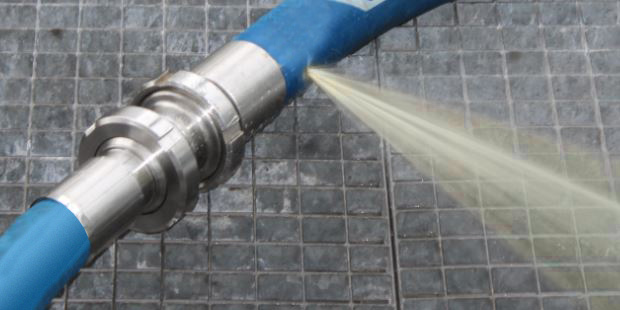
In almost all companies in the process industry, industrial hoses are used as flexible connections between fixed piping. That flexibility is also a risk. Hoses can get damaged and start leaking. Sometimes the medium sprays everywhere, other times it’s just a drip. Either way, when dealing with hot, flammable, toxic, or very valuable substances, you want to prevent this at all costs. No company wants cleanup costs, downtime, and production losses, let alone environmental or health damage and negative headlines. That’s why our specialists have created a checklist of 9 questions to help you prevent such incidents.
The 9-Point Checklist
The checklist consists of 9 questions:
- Can all hoses be identified and thus distinguished from each other (such as by application)?
- Is it known for each hose whether a proof of inspection or test certificate is required for its use?
- Are hoses periodically inspected within the company?
- Which aspects are inspected on the hoses; only visual inspection or also a pressure test?
- Are there employees qualified to perform inspections and tests themselves?
- Is there a procedure to immediately replace a potentially failing hose with minimal downtime?
- Is hose management documented centrally in a secure location accessible directly to stakeholders?
- In case of unexpected failure, can it be demonstrated that hose management was still under control?
- Is there assurance that all standards, guidelines, laws, and regulations are met?
If you answered “no” to any of these questions, you may be at risk. Hose management is likely not up to standard.
Download gratis de PDF versie voor jouw audits!
The 9-Point Checklist
The checklist consists of 9 questions:
- Can all hoses be identified and thus distinguished from each other (such as by application)?
- Is it known for each hose whether a proof of inspection or test certificate is required for its use?
- Are hoses periodically inspected within the company?
- Which aspects are inspected on the hoses; only visual inspection or also a pressure test?
- Are there employees qualified to perform inspections and tests themselves?
- Is there a procedure to immediately replace a potentially failing hose with minimal downtime?
- Is hose management documented centrally in a secure location accessible directly to stakeholders?
- In case of unexpected failure, can it be demonstrated that hose management was still under control?
- Is there assurance that all standards, guidelines, laws, and regulations are met?
If you answered “no” to any of these questions, you may be at risk. Hose management is likely not up to standard.
Outsourcing Management
Setting up procedures and a good system for hose management is time-consuming, costly, and demanding for the organization. You need to train your staff and invest in equipment for testing as well as software to record your management data. A good alternative is to outsource management to a partner who provides full-service. This means not only inspecting your hoses but also identifying, testing, certifying, replacing them on-site, and securely storing the data for you in an accessible system. It is important that this partner assists with matters such as applications, standards, laws, and regulations. Equally important is that they honor the agreements made. This way, you have no worries but still retain control over management. In case of an incident, you can immediately prove that your hose management is airtight!