
Choose the best professional wet and dry vacuum cleaner for industrial use.
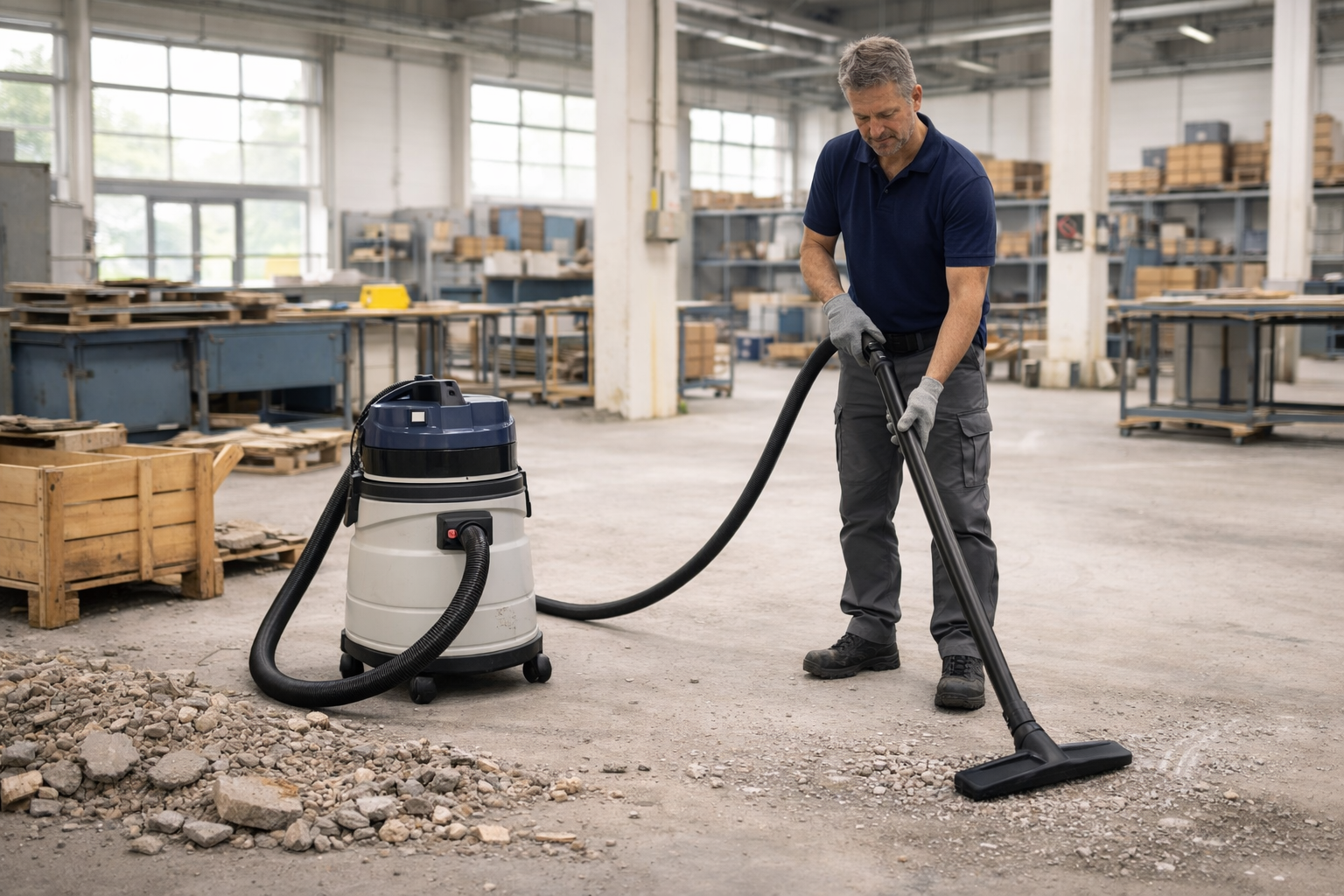
When looking for an industrial vacuum and water suction device, people often first consider the power of the machine. The higher the wattage, the more powerful the vacuum seems. However, this is one of the most common misconceptions within the industry. The power consumption mainly indicates energy usage and much less about actual performance.
Whether a vacuum and water suction device performs well depends on a combination of factors. Airflow, pressure, filtration, and the nature of the contamination play a much larger role than the wattage on the label. As a result, a machine with lower power can sometimes perform better than a model with a higher wattage. In this article, we explain what to consider when choosing an industrial vacuum and water suction device and what differences exist between the IPC Nevada and Dakota series.
Wattage doesn't tell the whole story
For many industrial machines, power is still considered the most important specification. That is understandable, but not always justified. The power indicates how much energy the motor consumes, not how much debris the machine can actually handle. The actual performance is determined by two technical characteristics: suction pressure and airflow. Suction pressure, also known as vacuum, determines the force with which debris is sucked up. Airflow indicates how much air the machine can move per hour. It is precisely the combination of these two values that determines how effectively a vacuum cleaner works. High suction pressure, for example, is helpful in sucking up heavier materials such as metal shavings, wet dirt, or compact dust. High airflow is particularly important when large amounts of dust need to be moved or when working with longer hoses. Therefore, it is not advisable to compare industrial vacuum cleaners based solely on wattage. Two machines with the same power can perform very differently in practice.What does the number of motors in a vacuum cleaner mean?
There are many misconceptions about the number of motors too. A vacuum cleaner with three motors does not automatically have three times the suction power of a model with one motor. Extra motors mainly contribute to a higher air flow rate. The vacuum pressure often remains largely the same. This means that multiple motors are especially useful when large amounts of dust need to be processed or when longer hose lengths are required. In practice, you can roughly follow these guidelines:Number of motors effective hose length
1 motor - up to about 10 meters
2 motors - up to about 15 meters
3 motors - up to about 20 meters
For sucking up liquids, this advantage usually plays a smaller role. Water is directly absorbed and generally does not need to be transported over long distances. For many industrial applications, a two-motor machine therefore already offers more than sufficient capacity. Models such as the IPC Nevada 640 or Dakota 440 are particularly suitable for higher dust volumes, longer hoses, and heavier usage conditions.
Plastic or Stainless Steel: Which Boiler is the Best Choice?
Another frequently asked question is whether a stainless steel boiler is better than a plastic one. The answer depends on the work environment. Stainless steel is often seen as the most professional solution, but that doesn’t automatically mean it's the best choice in every situation. In many industrial environments, a vacuum cleaner frequently deals with impacts, collisions, and intensive transport. In such cases, an impact-resistant plastic boiler can be more durable. When a machine is often moved between pallets, machines, or racks, plastic often offers advantages. The material is strong, impact-resistant, and less prone to dents. A stainless steel boiler is particularly advantageous when the machine mostly remains in one location or when chemical resistance is important. In environments where appearance and hygiene play a larger role, stainless steel is often chosen as well. Within the IPC program, both solutions are available. Therefore, the choice mostly depends on the application rather than an assumed quality difference between plastic and stainless steel.Sucking Up Dust and Water Requires the Right Configuration
While industrial vacuum cleaners for dust and water are multifunctional, it's important to use them correctly. A common mistake is vacuuming up water while the dust filter is still in place. Once a dust filter gets wet, it becomes saturated. This reduces the airflow and significantly decreases the machine's performance. Moreover, this can lead to unnecessary wear of the filter. The rule is therefore simple: when vacuuming dust, a filter should be in the machine; when vacuuming water, the filter should be removed. This simple action prevents many malfunctions and ensures that the vacuum cleaner functions optimally.
Why the Float is So Important
When it comes to suctioning liquids, the float plays a crucial role. This component protects the motor from water damage by shutting off the air supply once the maximum liquid level is reached. Although this system works reliably, it does require attention during use. Especially small stones, metal particles, and other coarse debris can prevent the float from moving freely. Regular inspection of the float chamber prevents problems and extends the life of the machine. Equally important is foam formation. While a float responds to the liquid level, it does not affect foam. Consequently, foam can reach the engine before the safety mechanism is activated. This risk frequently arises in car washes, workshops, vehicle cleaning, and industrial cleaning processes that use chemical agents. For this reason, many IPC machines are equipped with an anti-foam construction around the float. For applications with a lot of foam, an additional anti-foam filter can be applied.De juiste filter bepaalt de prestaties
Een industriële stofzuiger is slechts zo goed als zijn filtersysteem. De filter bepaalt niet alleen hoeveel stof wordt opgevangen, maar heeft ook invloed op het behoud van de luchtstroom en de levensduur van de machine. Voor algemeen industrieel gebruik volstaat een standaardfilter vaak prima. In werkplaatsen, magazijnen en productieomgevingen levert deze filter voldoende prestaties voor dagelijks gebruik. Bij houtbewerking liggen de eisen vaak hoger. Houtstof bestaat uit fijne deeltjes die filters sneller kunnen belasten. Daarom wordt in deze toepassingen regelmatig gekozen voor een carbon voorfilter. Dit filter vangt een groot deel van het stof op voordat het de hoofdfilter bereikt. Hierdoor blijft het luchtdebiet langer behouden en neemt de levensduur van de hoofdfilter toe. Voor zeer fijn stof, zoals roet, as of brandrestanten, zijn speciale fijnstoffilters of HEPA-filters noodzakelijk. Deze filters bieden een veel hogere filtratiegraad en voorkomen dat schadelijke stofdeeltjes opnieuw in de omgeving terechtkomen. De juiste filterkeuze is daarom minstens zo belangrijk als de keuze van de machine zelf.Waarom IPC kiest voor een andere aanpak dan automatische filterreiniging
Sommige industriële stofzuigers maken gebruik van automatische filterreiniging, ook wel filterklopfunctie genoemd. Hierbij wordt de filter tijdens het gebruik periodiek gereinigd om verstopping tegen te gaan. Bij toepassingen met grote hoeveelheden fijnstof kan dit een effectieve oplossing zijn. Tegelijkertijd heeft deze techniek ook een nadeel. Tijdens het gebruik raakt de filter geleidelijk vervuild, waardoor het luchtdebiet afneemt. Zodra de reiniging wordt geactiveerd, stijgt het debiet weer. Hierdoor ontstaat een voortdurende wisseling in de luchtstroom. IPC kiest daarom bij veel machines voor een andere benadering. Door gebruik te maken van een stabiele filteropbouw in combinatie met de juiste voorfilters blijft het luchtdebiet tijdens het werk constanter. Bovendien zijn er minder bewegende onderdelen aanwezig, wat de machine eenvoudiger en onderhoudsvriendelijker maakt. Voor veel industriële toepassingen levert dit een betrouwbare oplossing op met voorspelbare prestaties.
“The right filter choice is just as important as choosing the machine itself.”
Welke IPC stof-en waterzuiger past bij jouw situatie?
Voor algemeen industrieel onderhoud is een IPC Nevada 629 vaak een uitstekende keuze. Wanneer grotere stofvolumes moeten worden verwerkt of langere slanglengtes nodig zijn, biedt een Nevada 640 meer capaciteit. Voor intensief nat- en drooggebruik wordt regelmatig gekozen voor een Dakota 440. Bij toepassingen met houtstof of fijnstof is het verstandig om de machine uit te rusten met een carbon voorfilter, terwijl voor roet en ultrafijn stof een HEPA H14-filter vaak noodzakelijk is. Ook de werkomgeving speelt een rol. In omgevingen waar de machine regelmatig in aanraking komt met pallets, stellingen of productiemachines is een kunststof ketel vaak de meest duurzame keuze. Wanneer chemische bestendigheid belangrijk is, kan een RVS uitvoering juist de voorkeur hebben.IPC Nevada versus IPC Dakota
Within the IPC range, the Nevada and Dakota series are among the most chosen industrial vacuum cleaners and wet/dry vacuums. While both series are suitable for professional use, they differ in focus. The Nevada series is particularly known for its versatility and is widely used in workshops, warehouses, and general industrial environments. Depending on the model, both plastic and stainless steel versions are available. The Dakota series is more focused on heavier conditions where robustness, capacity, and intensive wet and dry use are central. Many models are equipped with impact-resistant plastic tanks that are well-suited for intensive use. Ultimately, which series is most suitable depends on the tasks, the intensity of use, and the type of dirt.
Scroll for more

