
Detection principles: how do gas detectors work?
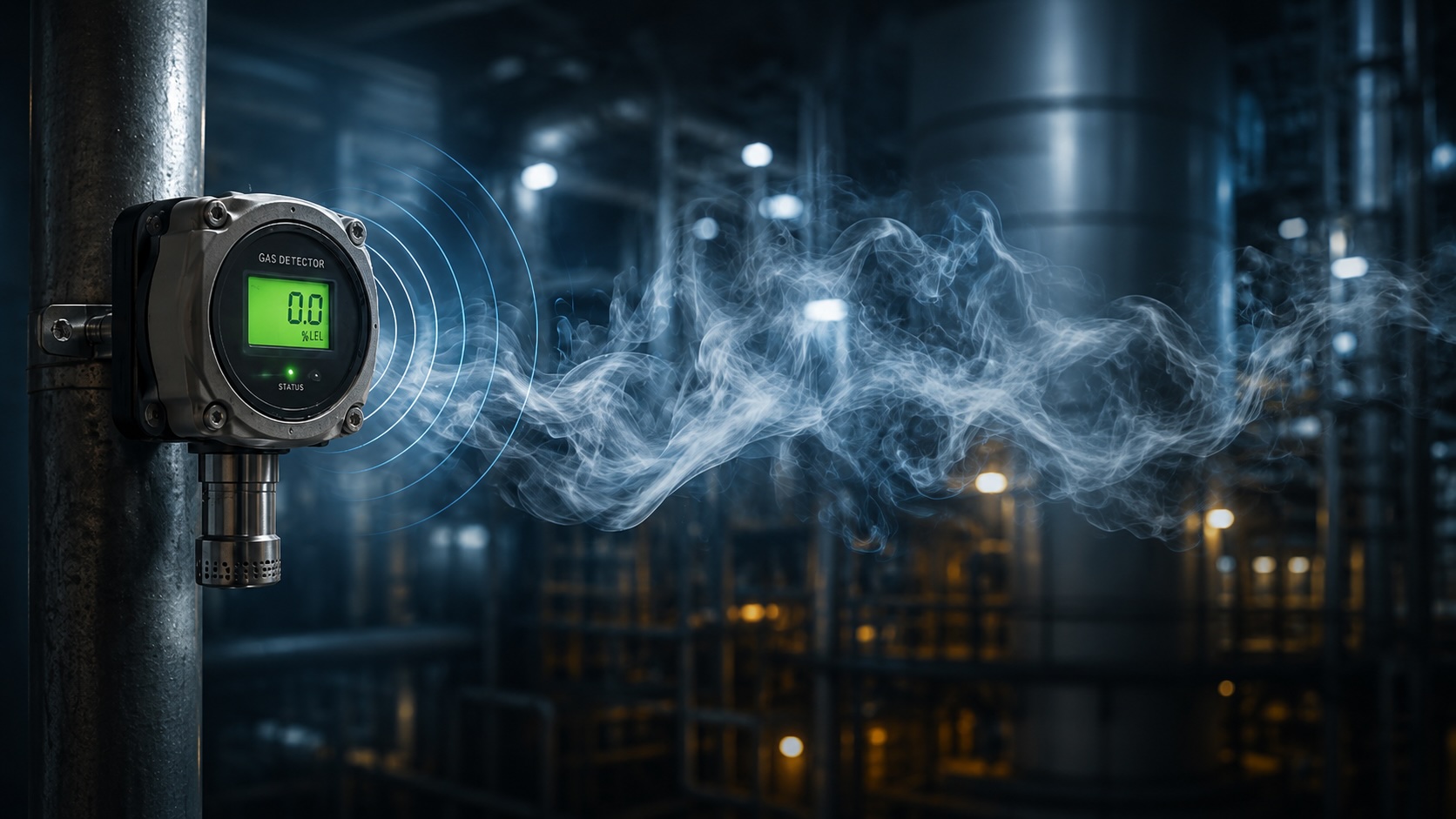
Gas detection is indispensable for safety in many workplaces: from industrial factories to parking garages and boiler rooms. Modern gas detectors use various techniques to detect (hazardous) gases in the air. Consider flammable or toxic gases, for instance. Different principles and sensor technologies are used for each type of gas. We will briefly explain the most important ones!
The Measurement of Flammable Gases
Flammable gases are gases that can cause combustion when mixed with oxygen and an ignition source (such as a spark or high temperature). Think of substances like methane, propane, hydrogen, and ammonia. Various sensors can measure the gas levels of these gases, such as:
- Catalytic Sensors
Catalytic sensors, also known as heat-generating sensors, utilize the property of flammable materials to release energy upon combustion. When methane, for instance, burns, it reacts with oxygen to produce carbon dioxide, water, and energy (=heat).
A catalytic sensor consists of two ceramic beads, also known as pellistors, each equipped with a platinum coil and heated to approximately 400 °C. One of the beads is coated with a catalytic coating, causing methane to oxidize on the surface and release energy, further heating the coil and increasing its electrical resistance. The other bead is uncoated and serves as a reference. By measuring these resistance changes through a Wheatstone bridge, the sensor can very accurately determine how much methane is present in the air and assess the explosion hazard.
- Infrared Sensors
Infrared sensors use the ability of gases to absorb light within a certain spectrum. For hydrocarbons, this is usually around 3.4 μm.
A light beam is directed through a cuvette, and a detector measures how much light is absorbed by the gas molecules present. A second light beam at a different wavelength helps to compensate for environmental factors such as humidity and temperature. Infrared sensors do not require oxygen, cannot be poisoned, and can achieve very high sensitivities by using a long cuvette. However, they are limited to detecting specific substances and are often more expensive than catalytic sensors.
- Flame Temperature Sensors
Flame temperature sensors measure the temperature increase in a flame caused by the presence of flammable gases. Flame temperature sensors are completely resistant to poisons and detect all flammable gases. On the other hand, they require fuel and oxygen, and the measurement is complex and at a higher price level.
The Measurement of ZZS and Other Toxic Substances
ZZS and other toxic substances are harmful to the health of your employees and the living environment, even in low concentrations. You find these substances, among other places, in industries and laboratories. Think of carbon monoxide, benzene, hydrogen sulfide, nitrogen dioxide, etc. Various sensors can measure the gas levels of these gases, such as:
- Electrochemical Sensors
Electrochemical sensors work like a battery that reacts to specific gases. When a gas reaches the working electrode, a chemical reaction occurs that produces or consumes electrons. These electrons flow via a measurement device to the counter electrode, creating an electrical current proportional to the gas concentration. Electrochemical sensors are extremely sensitive and can even detect low concentrations. They are also very specific and do not require auxiliary energy. However, they only measure reactive gases, and the sensor signal is directly proportional to the concentration.
- PID Sensors (Photo Ionisation Detection)
PID sensors use high-energy UV light to ionize gas molecules. These charged particles are then passed through an electrically charged cuvette, where they lose their charge and create a measurable current. The current is equal to the concentration of the gas.
PID sensors are extremely sensitive and can detect many different substances, including relatively inert gases. However, they measure non-specifically and only provide a summed signal when measuring mixtures.
Which Sensor Should You Use?
It is important to understand the different sensor technologies and their applications. Whether it is detecting flammable or toxic gases, the choice of the right sensor makes a difference in the safety of employees and the environment. Therefore, always ensure you are well advised by an expert!