
Do we become more sustainable through smart metering?
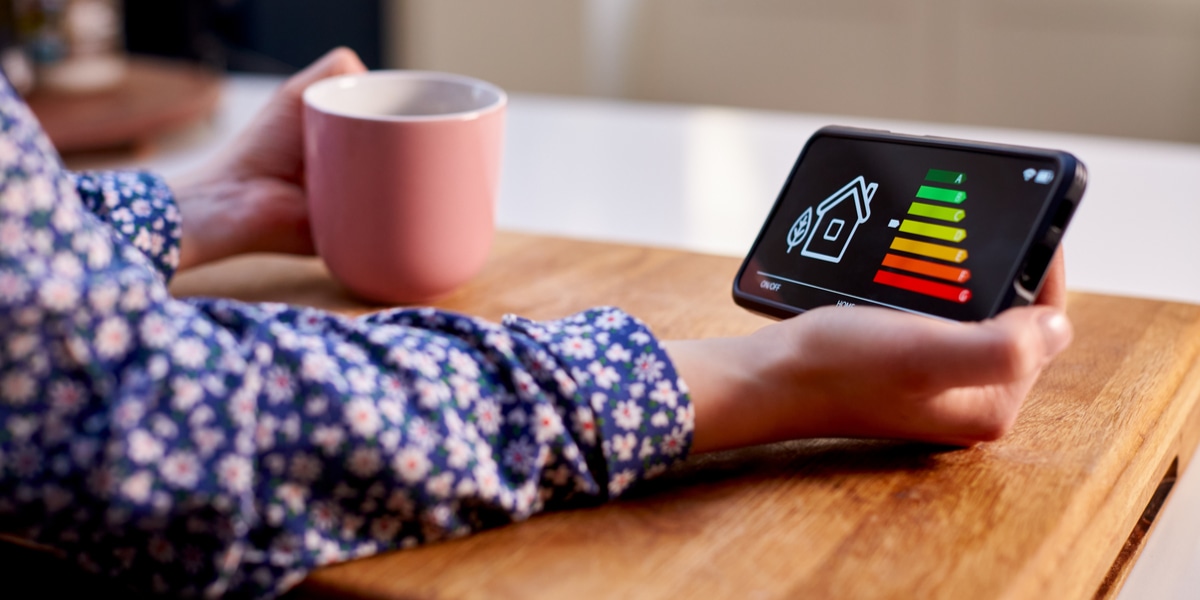
In our drive for sustainability, smart metering plays an increasingly important role. But do smart meters really make us more sustainable? In this blog, we explore whether smart metering can contribute to sustainability and how to best handle the data.
Smart Use of Available Data
Smart metering offers numerous opportunities to make our energy consumption more efficient and sustainable. However, it all starts with what we do with that data. The simple fact that we have smart meters does not automatically mean everything becomes more sustainable. It’s about smartly using the available data.
An Example of Smart Use
Imagine leaving your house in winter. You could simply set your thermostat to 20 degrees, but when you leave, it automatically lowers to 15 degrees. This is a simple example of how we can smartly manage energy consumption.
This principle can be applied on a larger scale to other devices in the home. For example, if the sun warms up a room, smart thermostats can detect this and avoid turning on the heating there. In short: it’s all about making good use of the collected data.
Collaboration Between Different Platforms
An important aspect of smart metering is collaboration between different platforms. It’s not just about collecting data from smart meters, but also combining information about energy usage, energy feed-in, and device usage. This way, smart meters can eventually detect when there is a low energy demand. At those times, it would be convenient to run the washing machine or charge the electric car.
Storage and Smart Use of Energy
If we don’t store energy, it disappears. To promote sustainability, we need to consume or store energy. Storage can be done via batteries or hydrogen. Storing energy allows us to use it when needed and helps balance supply and demand. This is where smart metering can really make a difference.
Smart Metering and Future Possibilities
Smart metering offers even more opportunities for sustainability. For example, sharing a charging station with neighbors during off-peak energy hours (midday). The concept of decentralized energy storage, where solar panels in a neighborhood are connected to a large battery, also has great potential. This local storage makes the neighborhood less dependent on the central energy grid and could be applied on a larger scale in the future.
Conclusion
Smart metering can certainly contribute to sustainability, but it all depends on smart use of the collected data. Simply having smart meters is not enough. We need to be able to intelligently analyze and use the data to make our energy consumption more efficient. Only then can we accelerate our path to a more sustainable future.