
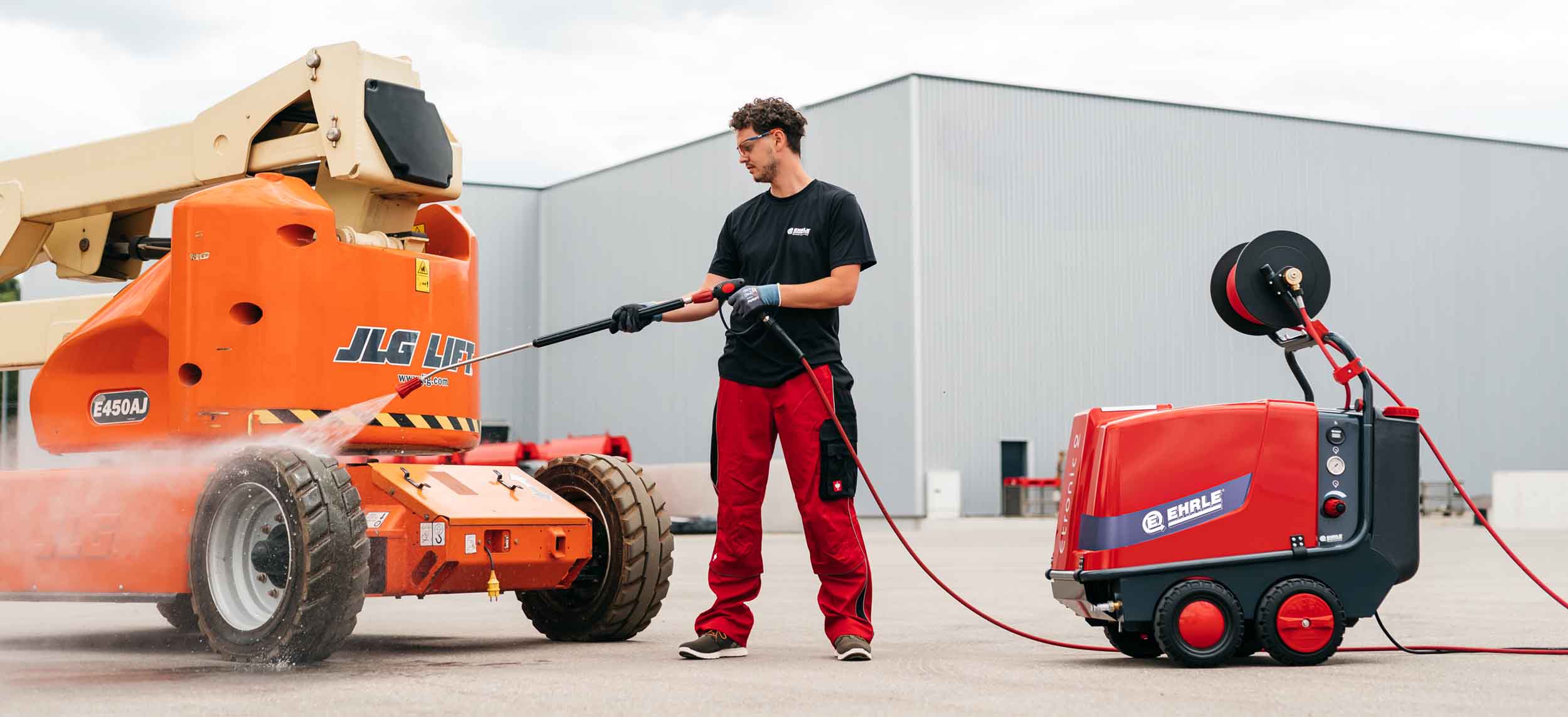
Whether you operate in construction, industry, automotive or agri. A clean and safe working environment is a prerequisite for good work. And then a professional pressure washer is an indispensable tool. Yet the potential of such a powerhouse is often not fully exploited. A shame! Because anyone who knows exactly how a pressure washer works gets more out of every litre of water. And from every working day. In this article, we explain how a professional pressure washer works and how to choose the right nozzle, temperature and technique for the best results.
Operation step by step
Step 1: The water intake
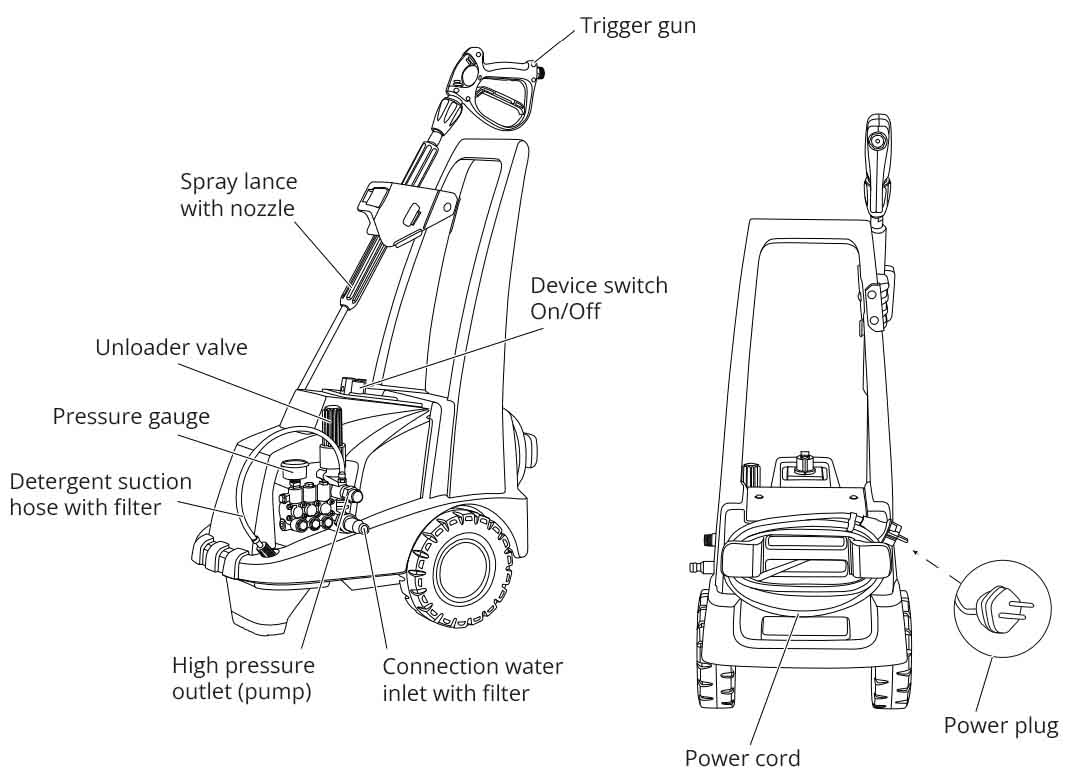
A professional pressure washer is connected to a water source, usually a standard tap. The water flows into the device under low pressure. Note: insufficient water supply = unstable performance = frustration on the shop floor. So ensure a constant supply with sufficient capacity.
Step 2: The motor and pump
The heart of the system is the motor that drives a crank pump. This can be an electric or petrol engine. For the pump to function properly, it needs water supplied through a hose. Through a valve, the pistons suck in water and force it through a pressure valve. This process significantly increases the pressure of the water, creating a powerful water flow. Professional pressure washers often run at 1400 rpm, which means less wear and tear and a longer lifespan. The result: a powerful, reliable jet that effortlessly tackles grease, moss, mud or cement residue. Tip: Choose a low-speed model if you work long and intensively. This pays off in performance as well as maintenance costs.
Step 3: The right nozzle
Via a high-pressure hose, the water reaches the nozzle. Here, the pressure is converted into a directed jet. And this is where things sometimes go wrong. The wrong nozzle reduces results. So it is important to choose the right nozzle:
- Vario nozzle: change between narrow and wide jet. Ideal for varied work.
- Fixed wide jet: for sensitive surfaces or efficiency on large areas.
- Rotating head: for heavy soiling such as graffiti, moss or dried-on oil.
Hot water pressure washer: for grease, oil and lubrication
Sometimes cleaning with cold water is not enough.With a hot-water pressure washer, a heating system is added to the process.The water is heated in a boiler or coil to temperatures as high as 85°C.This loosens grease, oil and chemical contaminants faster. This not only saves time, but also prevents excessive use of chemicals.
Adding cleaning agents? Do it right
Many professional models of pressure washers have a soap injector or tank with which cleaning agents are added. This is done via an injector that mixes the soap or degreaser with the water. Think of oil or grease removers for workshops or soap for vehicles. Always use cleaning agents that are suitable for high-pressure systems. This prevents blockages and damage to the pump. Moreover, it gives better cleaning results. Instead of the soap injector or tank, you can also use a foam lance that creates a rich lather on a vehicle for thorough cleaning.
Choosing a high-pressure cleaner? Look beyond pressure
Choosing the right pressure washer goes beyond the number of bar. Consider:
- Type of dirt (grease, cement, moss)
- Type of surface (sensitive, porous, coated)
- Working environment (indoor, outdoor, mobile)
- Use time (intensive daily vs occasional)
More information on how to choose the right pressure washer? Contact our team directly. We are happy to help you personally.
Conclusion
A professional pressure washer is not a standard piece of equipment. It is a system that works well if you understand it.Whether you are cleaning facades, servicing vehicles, cleaning construction sites or stables.With the right pressure washer, you work faster, more thoroughly and more sustainably.
We have a wide range of pressure washers available. View our professional pressure cleaners in our online catalogue.