Solar Panels on Trucks: How Solar Energy Makes Transport More Efficient
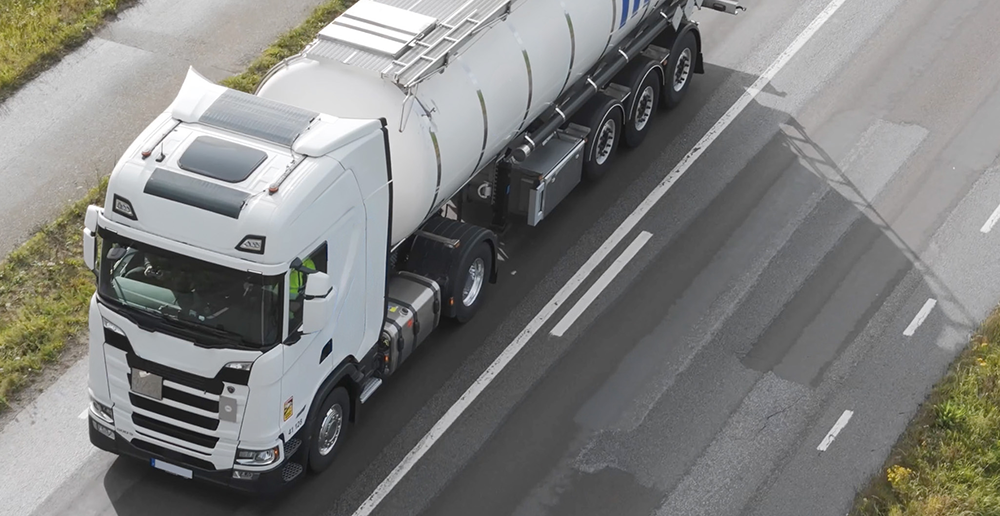
Vehicles that generate their own solar energy can play an important role in the energy transition. This is evident from the European research project SolarMoves. According to the researchers, solar panels can significantly reduce electricity demand, CO₂ emissions, and pressure on the electricity grid.
This is interesting for the transportation sector. Trucks, trailers, and delivery vans often have large roof surfaces that normally remain unused, while vehicles simultaneously have more and more electrical systems on board.
A truck, trailer, or delivery van does not only consume energy while driving. Also, during loading, unloading, resting times, and standstill, systems such as liftgates, cooling motors, stand air conditioners, track & trace, lighting, and onboard equipment continually require power. This energy usually comes from the battery, which then needs to be recharged via the alternator or engine.
Especially for vehicles with many electrical consumers, this often leads to extra load on the alternator, more idling, and higher fuel consumption.
Solar panels on vehicles provide an additional energy source. By using the available roof surface for energy generation, the battery can be supported both while driving and during standstill.
This is not only interesting from a sustainability perspective but also from an operational standpoint. Reducing the load on the battery and alternator can contribute to more stable battery voltage, fewer battery-related failures, and lower fuel consumption.
Why Solar Panels on Vehicles Are Becoming Increasingly Relevant
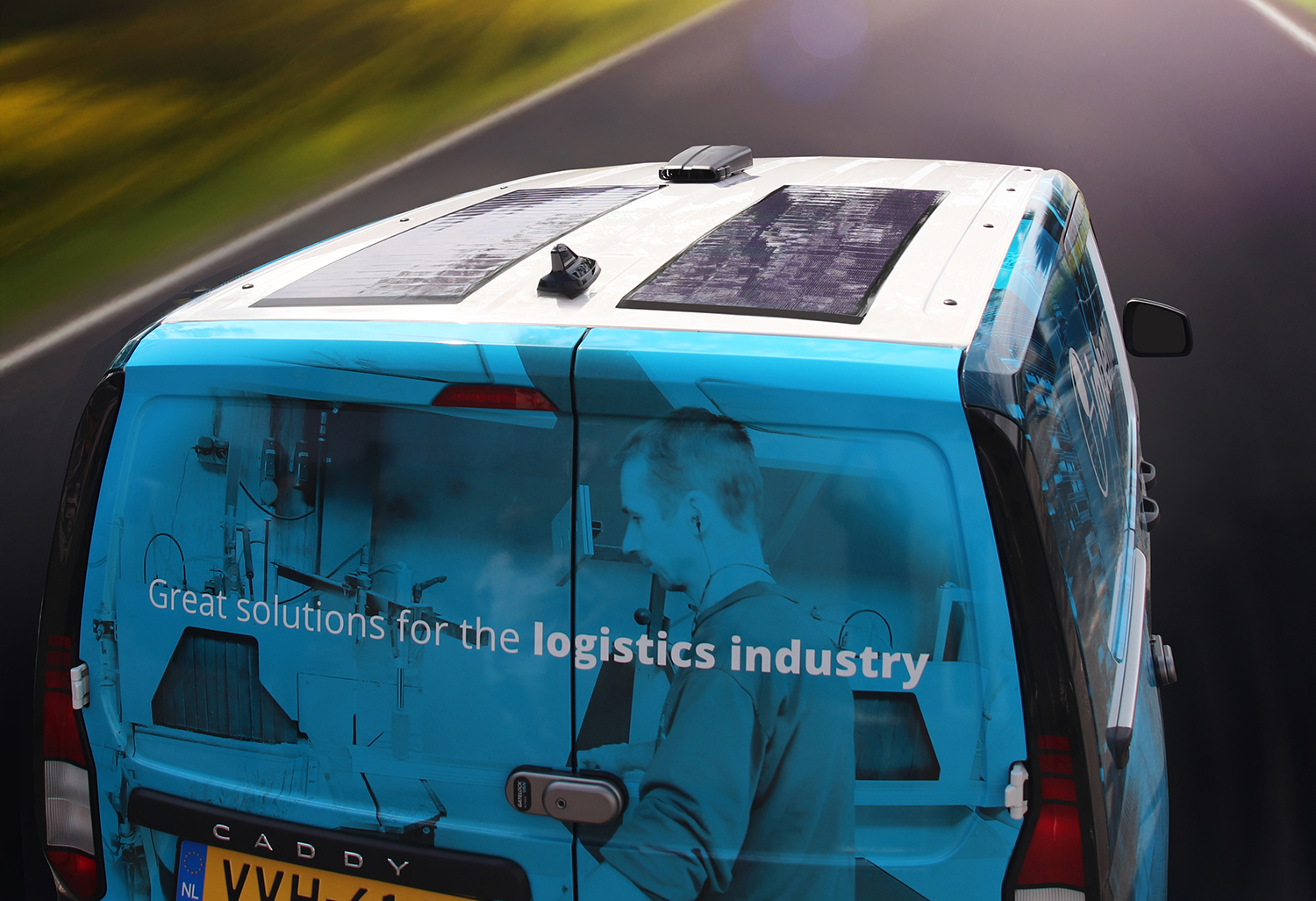
Solar panels on trailers and trucks are not new. For a long time, large-scale application was limited because panels were relatively heavy, thick, and vulnerable to vibrations and intensive use. However, technology has made significant strides in recent years. Modern solar panels for transport applications are thin, flexible, and lightweight. Some systems are only a few millimeters thick and can be directly glued to the roof of a trailer or truck without major modifications to the vehicle.
At the same time, modern commercial vehicles are using more and more electrical systems. Whereas trucks used to be mainly mechanical, trucks, trailers, and delivery vans now often function as mobile energy systems. Cooling units, loading ramps, telematics, lighting, stationary air conditioners, and onboard equipment continuously demand power from the battery. Even when stationary. This puts extra strain on the battery and alternator, especially for vehicles that make many short trips or frequently stand still with active systems. In distribution transport, refrigerated transport, and service vehicles, this often leads to extra idling, increased wear on batteries and alternators, and a higher risk of battery problems.
This is precisely why there is growing interest in solar panels on trucks, trailers, and delivery vans. Not as a replacement for existing drive technology, but as a way to use the energy needed on board more intelligently. Solar panels are increasingly becoming part of a broader energy system on vehicles. Not only to recharge batteries but also to actively support auxiliary systems. Especially in combination with battery packs, smart charge controllers, and energy management, a more efficient energy system on board is created.
How do solar panels work on trucks?
Solar panels for transport are mounted on the roof of the vehicle. As soon as daylight is available, the panels generate electricity. Through a charge controller, this energy is used to recharge the vehicle battery in a controlled manner. The generated electricity then supports onboard electrical systems, reducing the need for the alternator to generate energy via the engine. This makes the vehicle's overall energy system more efficient. Vehicles that spend a lot of time outdoors or are actively used daily particularly benefit from this. Think of distribution trucks that make many stops, refrigerated trailers that need to remain cold for extended periods, or service vehicles that use equipment on the go.
In modern trailers, solar panels are increasingly combined with battery packs and other energy technologies. Large field tests by companies like TIP Group show that solar panels are no longer used as standalone solutions but as part of integrated energy systems on trailers. In this setup, solar panels function as a sort of 'range extender'. They help maintain battery levels, especially during downtime, and extend the operational time of electric auxiliary systems and cooling units.

What do solar panels yield?
The exact yield of solar panels on a truck, trailer, or van depends on various factors. The type of vehicle, the available roof surface, the number of panels, the driving profile, and the daily power consumption all play a role. Nevertheless, field measurements show clear results. Transport company Samat International tested solar panels on part of its fleet for twelve months. Trucks with solar panels were compared to similar vehicles without a solar energy system. The vehicles drove under comparable conditions and averaged nearly 90,000 kilometers per year. According to the field data, the trucks with solar panels realized an average fuel saving of 6.9%. That equated to approximately 1,478 liters of diesel saved and nearly 4 tons less CO₂ emissions per vehicle per year.
Additionally, Samat reported less idling and fewer battery-related failures within the fleet. That latter point is particularly interesting for many transport companies. Besides fuel savings, energy management in practice also revolves around reliability and preventing unplanned downtime. Other practical applications also show that solar panels can structurally contribute to lower energy consumption. As such, trailers in retail and distribution applications are increasingly being equipped with solar panels for tail lifts, onboard electronics, and supporting systems.
What does research say about the yield?
According to the SolarMoves research, trailers and trucks can contribute more to energy generation than is often assumed.
A trailer roof of approximately 30 m² can generate about 55 kWh per day on sunny days, according to researchers. When the sides of vehicles are also utilized, this potential increases.
For electric distribution trucks, the biggest gain is primarily in powering auxiliary systems.
According to the researchers, solar energy can take over a significant portion of the energy needs of supporting systems. This means fewer charging moments, less strain on the power grid, and more efficient energy use within fleets.
For diesel vehicles, the gain mainly lies in supporting systems that normally require fuel indirectly through an alternator or idling engines.
Solar panels do not provide enough energy to fully power a truck, but they can take over an important part of the energy supply for auxiliary systems.
Solar Panels on Trucks
Solar panels on trucks are generally used to support the 12V or 24V battery. This is particularly beneficial for trucks equipped with a lot of electrical devices, such as auxiliary air conditioners, communication systems, lighting, and onboard electronics. International trucks and distribution vehicles often experience idle periods during which systems remain active while the engine is off. In such cases, solar panels can help maintain the battery level and reduce the load on the alternator and engine. Solar panels are also increasingly applied on the cabin roofs of trucks for systems like refrigerators, air conditioners, and other comfort provisions. This reduces the need to keep the engine idling during rest periods, which not only saves fuel but also contributes to driver comfort.
Solar Panels on Trailers and Refrigerated Trailers
Trailers often have large roof surfaces, making them suitable for larger solar energy systems. On trailers, solar panels are used for loading ramps, lighting, telematics, and support systems of refrigerated trailers, among other things. The application is growing rapidly, especially for refrigerated trailers. In modern systems, solar panels are combined with battery technology and electric cooling units to allow trailers to function autonomously for longer periods. In various practical trials, it has now been demonstrated that electric refrigerated trailers can remain operational for extended periods with the support of solar energy and battery storage. Solar panels are particularly helpful in keeping batteries charged during standstill. Interest in solar panels on trailers is also growing in retail distribution, partly because more and more auxiliary systems are being powered electrically.
Solar Panels on Delivery Vans
Delivery vans are increasingly using more power on board. Consider service vehicles of mechanics and installers who use electric tools, battery chargers, lighting, or mobile workstations while on the road. In such vehicles, the engine is still often idling to provide power to equipment or charge the battery. Solar panels can help to meet part of that energy demand while on the go. For electric delivery vans, solar energy can also be used for supporting systems, allowing more battery capacity to be available for driving itself.
What should you pay attention to?
Not every solar panel system is automatically suitable for vehicles. It is important that a system is resistant to vibrations, moisture, and intensive daily use. The quality of the charge controller also plays an important role, as it determines how efficiently and safely the generated energy is stored and used. Furthermore, the ideal solution varies by vehicle type and application. A refrigerated trailer has different requirements for energy management than a service vehicle or distribution truck. Therefore, when considering solar panels for transport, it's usually important to look at the vehicle's usage profile, the available roof space, and the amount of power needed daily. Vehicles with long idle periods, active auxiliary systems, or a high electrical load benefit relatively strongly from additional energy generation via solar panels.
Why CIGS solar panels are often used in transport
Solar panels on vehicles need to withstand very different conditions than solar panels on buildings. They face vibrations, temperature fluctuations, moisture, dirt, and constant movement on a daily basis. This is why flexible CIGS solar panels are increasingly used in transport. These panels are thin, lightweight, and flexible, making them suitable for mounting on vehicle roofs. Moreover, they continue to generate energy even in diffuse light and less ideal weather conditions. According to Green Energy, these systems are specifically developed for applications in heavy transport and logistics.
Solar Panels as Part of Smarter Transport
Solar panels on trucks, trailers, and delivery vans are increasingly being used as a practical solution for smarter energy management within transport and logistics. By partially powering auxiliary electrical systems with solar energy, vehicles can use their available battery capacity more efficiently. Especially for vehicles with many electrical consumers - such as refrigerated trailers, distribution trucks, and service vehicles - solar panels can help reduce the load on the battery and alternator. This can lead to less idling, a more stable energy supply, and lower fuel consumption.
Thanks to modern, flexible solar panels and improved energy storage, vehicles are increasingly evolving into independent energy systems. Solar panels do not replace the drivetrain but serve as intelligent support for onboard electrical systems. Research and practical applications show that solar panels on trucks and trailers now go far beyond a niche solution. In transport, they are becoming increasingly part of broader strategies related to fuel savings, operational efficiency, CO₂ reduction, and more sustainable fleet management.
Interested in solar panels on the roof of your vehicle? Check out the ultra-thin solar panels from Green Energie.