
Instructions for working with hoses
In general
With our general instructions for installation, commissioning, storage and maintenance, we help you to use hose assemblies safely and efficiently with an optimal lifespan.

Storage
- Hoses should always be stored flat, stretched or coiled.
- Protect metal parts such as couplings against corrosion.
- Store rubber and plastic hoses in a cool, moderately ventilated, dark room with average humidity and a temperature between 10 and 20 degrees Celsius.
- Avoid crushing and / or indenting the hoses by, for example, stacking too high or couplings resting on the hoses.
Installation
- Check that the couplings and / or sealing surfaces are clean and undamaged.
- Make sure that the hose is not kinked, flattened, twisted or mounted with too small a bend radius.
- Connect any static discharge facilities.
- Take any machines / pumps out of operation.
Commisioning
- Check that the hose still has a valid certification (if applicable).
- Inspect the hose for visible damage or defects. Metal coupling parts must not show any corrosion.
- Check whether the hose is suitable for the medium to be transported.
- Never exceed the maximum working pressure, minimum and maximum working temperature of the medium. Not even for a short time.
- Avoid too high or too low ambient temperatures.
- Avoid long-term exposure to ozone and UV radiation such as direct sunlight.
- Avoid prolonged exposure to vibrations.
- Never move a hose assembly by pulling on the couplings.
- When lifting a (still filled) hose, ensure a good distribution of lifting equipment by using hose saddles, for example.
- Prevent a hose from lying in a path where people walk or where transport equipment is used. A hose bridge prevents damage to the hose and prevents tripping.
Maintenance
- Clean hoses thoroughly when they are (temporarily) taken out of service.
- Determine which cleaning agent and cleaning method are appropriate for the specific hose assembly and medium.
- Remove dirt and dust from the coupling parts and sealing surfaces.
- Use plastic dust caps on the coupling parts when storing the hoses.
- Carefully work with high pressure (steam) equipment and make sure that the inner and outer wall of the hose is not damaged.
Never drive a forklift or other means of transport over a hose and never step on it.
This results in (invisible) damage to the construction of a hose, resulting in tears or cracks. If a hose must lie through a path, use a safe hose bridge.
Installation guidelines
The lifespan of a hose is largely determined by the method of installation and assembly. If done according to our guidelines, the hose will last considerably longer and this will reduce the risk of incidents.
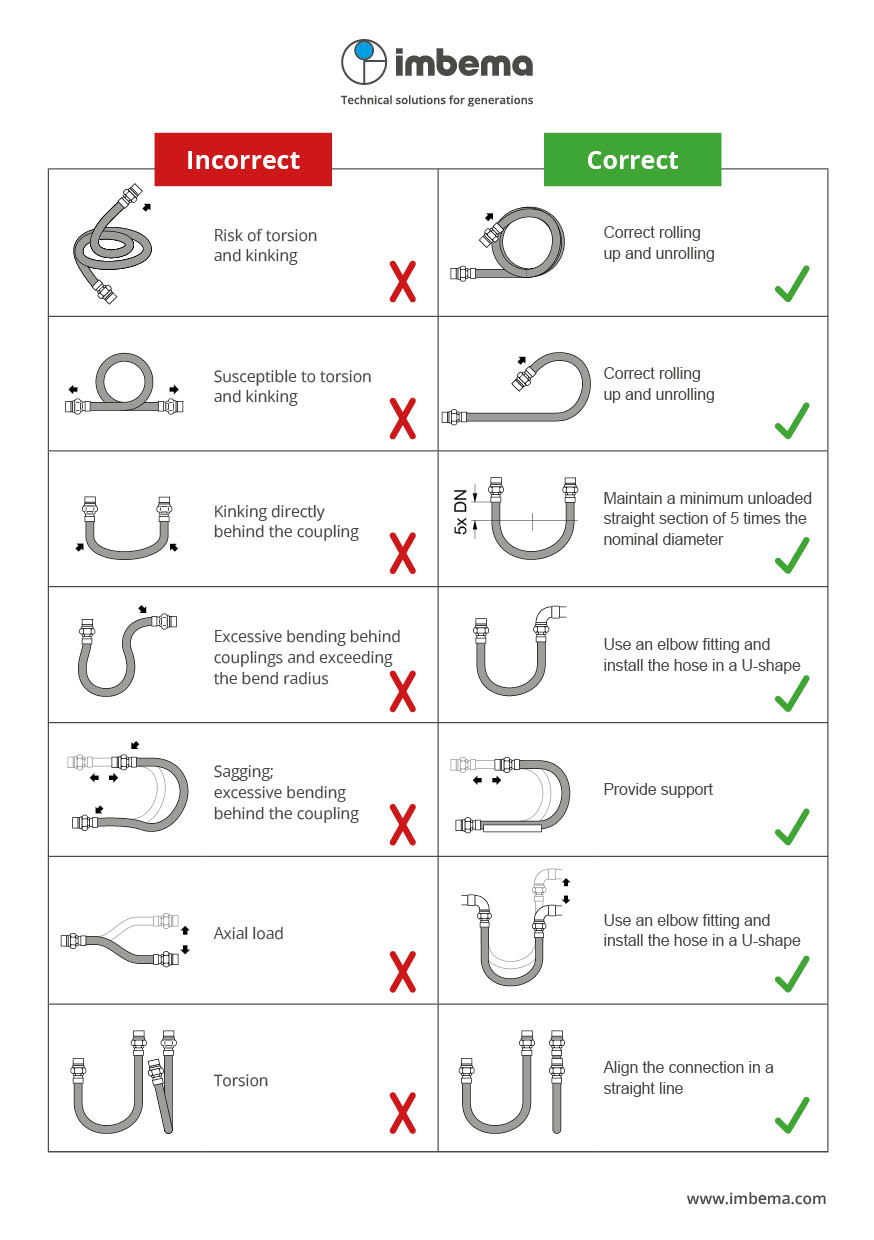
Download the assembly instructions
Inspection, testing and certification
Hoses (assemblies of hoses and couplings) are used to transport gases, liquids and / or solids. They are often part of a business-critical process. A broken hose or defective coupling not only causes downtime and loss, but also creates unsafe situations. Especially when it comes to hazardous substances, high pressures, high and extremely low temperatures.

'The best insurance against a hose incident is regular inspection, testing and certification.'
Modern test facility
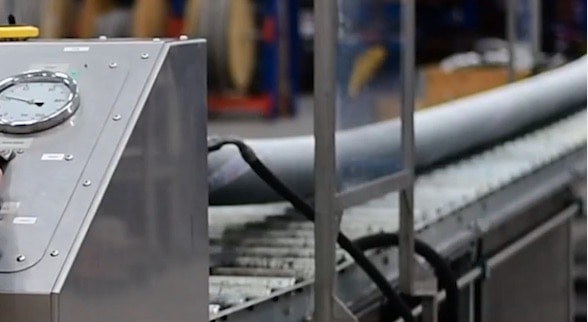
We inspect, test and certify all hose assemblies in our modern facility in Vlaardingen (NL), near the the Port of Rotterdam. We test in-house where we have all testing conditions under control. If required, we also take care of the cleaning and transport of your hoses.
CLETON hose assemblies are designed and produced according to the Pressure Equipment Directive 97/23 / EC (PED) and meet the safety requirements set therein. Our assembly and testing procedures are established in accordance with ISO 9001.