
Electric rear underrun protection: innovation or smart choice?
09-02-2026
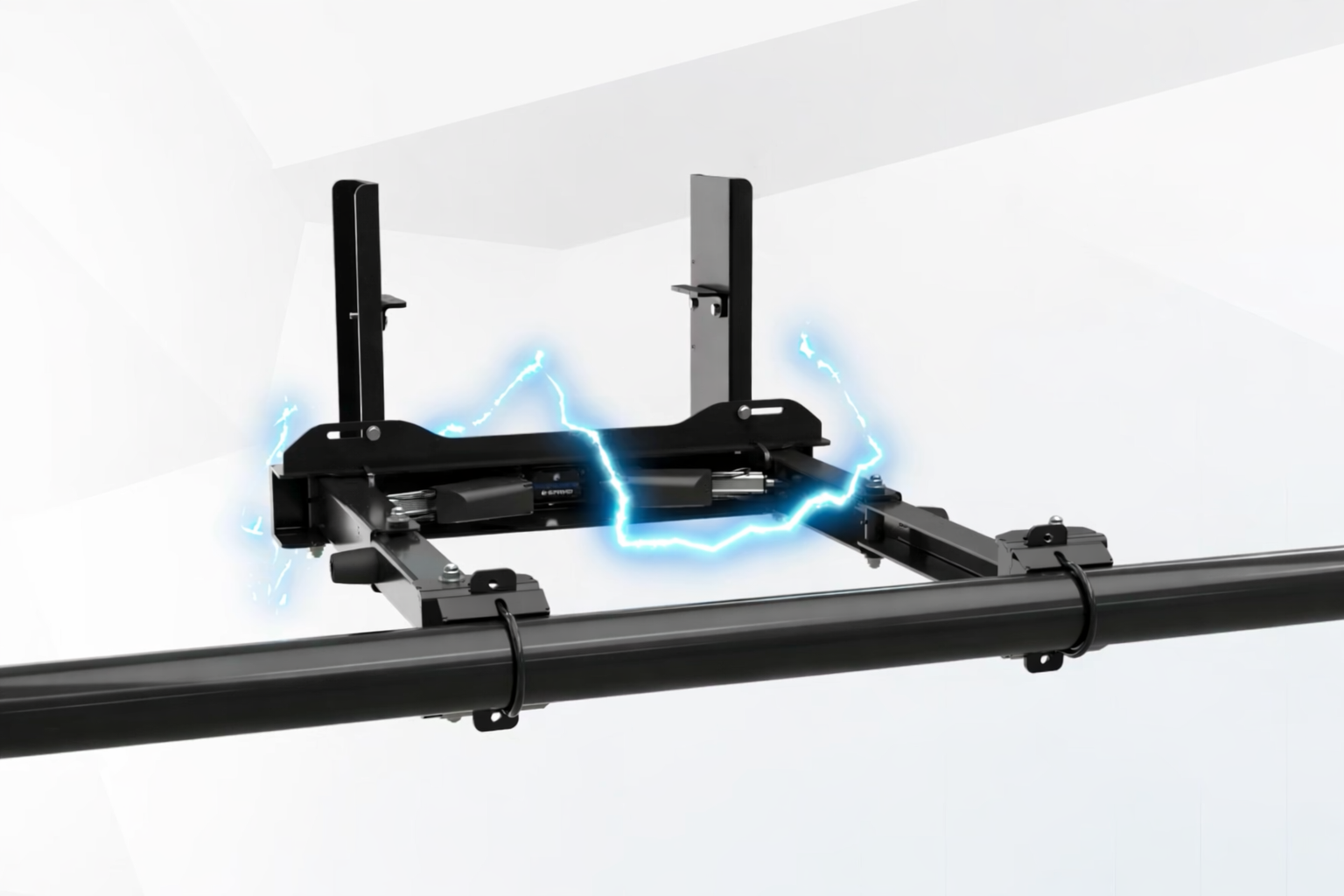
Recently, alongside hydraulic models, electronic rear underrun protection systems have entered the market. They fulfill the same function as underrun protection but differ in their drive systems and how they are integrated into the vehicle.
This raises a logical question: what does this mean in practice? When should you choose an electronic underrun protection system, and what does this choice mean for the vehicle's build, usage, and maintenance? This article will explain what an electronic underrun protection system is, how it differs technically from a hydraulic version, and in what situations an electronic protection system is a logical choice.
What is an electronic underrun protection?
An electronic underrun protection is a retractable underrun protection system powered by electric actuators instead of hydraulic cylinders. Like a hydraulic underrun protection, the bar can extend and retract to meet legal underrun protection requirements and provide enough space during loading and unloading operations. The function remains the same. The difference lies not in what the underrun protection does, but in how it is powered and integrated into the vehicle. This difference affects installation, maintenance, and daily operation.
Electronic versus hydraulic underrun protection
A hydraulic underrun protection typically requires multiple components, such as a hydraulic unit, pipes, and couplings along the chassis, in coordination with other hydraulic functions on the vehicle. Thus, the underrun protection becomes part of a broader hydraulic system.
An electronic underrun protection works with electric actuators and does not depend on hydraulic pressure or oil circulation. In many cases, the system comes pre-assembled and pre-wired, including integrated end-position detection. Therefore, hydraulic hoses and couplings at the rear of the vehicle are not needed. This has a direct impact on the design of the build and how the system is integrated.
What does an electronic underrun protection mean for the bodybuilder?
Integration in the build
As hydraulic components are eliminated, the installation becomes more straightforward. There are fewer loose parts and less dependency on other systems. End positions and sensors are often pre-set, minimizing adjustment work during installation. For bodybuilders, this means a more reproducible installation process. Especially in series production or vehicles with complex rear structures, this results in more predictability in planning and execution.
Workshop and installation process
In the workshop, this typically translates to fewer assembly operations and less coordination between hydraulics, electrical engineering, and mechanical assembly. This brings peace of mind to the process and reduces the risk of failure costs.
Compact design
Many electronic underrun protections are designed with a very compact retracted position. This is particularly relevant for vehicles with limited rear overhangs, such as tippers, skip loaders, and hooklift vehicles. In these applications, loading and unloading space is crucial, and a compact underrun protection offers more design freedom.
What does this mean for carriers and end-users?
Operation and use
Electronic underrun protections operate with fixed movements and end positions. Combined with integrated sensors, the position of the underrun protection is clearly visible. This prevents doubts about whether the bar is correctly retracted or extended. Since the underrun protection operates independently from the vehicle's hydraulic system, its operation remains independent of other hydraulic functions, making its use predictable even under intense use.
Maintenance and attention points
An electronic underrun protection is not maintenance-free, but maintenance shifts from hydraulic to electric and mechanical. Hoses and hydraulic couplings are no longer concerns. Instead, electrical actuators, wiring, connections, and mechanical guides become the focus. For fleet owners and carriers, this means a different maintenance strategy but not necessarily more maintenance. It mainly requires the right inspection moments and system knowledge.
When should you choose an electronic underrun protection?
An electronic underrun protection is especially a logical choice when simplicity, compact installation, and predictable assembly are important. In practice, you mainly see this with:
- vehicles with limited rear overhangs, such as tippers, skip loaders, and hooklift vehicles;
- builds where the hydraulic system is already complex;
- situations where clear operation and fixed end positions are desired.
Electric is not a replacement for all hydraulic systems. The right choice always depends on vehicle type, application, and intensity of use. It is not a matter of better or worse, but of suitable or not suitable.
Legislation and ECE R58-03
Like hydraulic versions, electronic underrun protections must meet the applicable regulations for underrun protection, including ECE R58-03. The drive system is not decisive. What matters is the type approval and correct integration into the vehicle. Proper installation and application remain essential to meet legal requirements. Also, read the blog: Stricter R58-03 requirements for truck underrun protections.
Summary
An electronic underrun protection is a retractable underrun protection system that works with electric actuators instead of hydraulics. The function remains the same, but the drive system and integration differ significantly from a hydraulic underrun protection.
For bodybuilders, this means less dependency on hydraulic components, a clearer assembly process, and more predictability in the build. For carriers, an electronic underrun protection offers clear operation, fixed end positions, and a system independent of the vehicle's hydraulics.
An electronic underrun protection is particularly interesting for vehicles with limited rear overhangs or complex hydraulic systems. The right choice ultimately depends on the vehicle type, application, and usage conditions.
Want to know which version best suits your build? Visit the product page or contact us for technical advice.
FAQ – Electronic underrun protection
What is the difference between an electronic and a hydraulic underrun protection?
An electronic underrun protection is driven by electric actuators and operates independently of hydraulics. A hydraulic underrun protection uses oil, pipes, and a hydraulic unit.
Do electronic underrun protections comply with regulations?
Yes, provided they have a valid type approval, such as ECE R58-03, and are correctly applied.
Are electronic underrun protections maintenance-free?
No. However, hydraulic maintenance points are eliminated. Maintenance focuses on electrical and mechanical components.
For which vehicles are electronic underrun protections suitable?
They are often used in vehicles with limited installation space, such as dump trucks, skip loaders, and hook lift vehicles.
Is electric better than hydraulic?
Not necessarily. The choice depends on the vehicle, application, and preference for integration and maintenance.